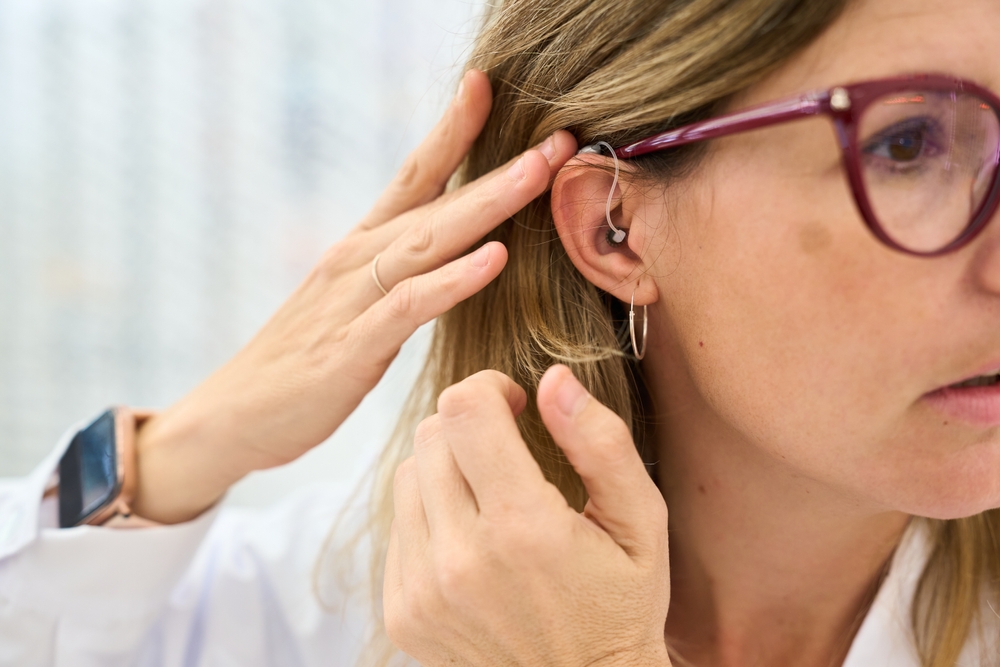
A primary reason individuals put off addressing auditory deficits is the assumption that assistive devices will be unsightly or awkward to wear. This hesitation is entirely valid given historical product designs! Furthermore, many individuals harbored deep anxieties about social isolation, fearing others would exclude them from discussions based on assumptions of cognitive decline or profound auditory deficits.
Consequently, this outdated, negative stereotype persists, preventing numerous individuals from seeking professional care. In reality, the sophisticated hearing instruments of the present era deliver a look and feel that shatters these old assumptions. Revolutionary breakthroughs in micro-component miniaturization and ergonomic design have rendered these devices incredibly compact, ultra-lightweight, and virtually unnoticeable.
If you have spent years avoiding an audiologist due to the appearance of old devices, now is the perfect moment to explore today’s sleek alternatives!
The Hearing Aid You’re Picturing Doesn’t Really Exist Anymore
If you close your eyes to conceptualize a hearing system, your mind likely crafts a picture of a prominent, cumbersome unit draped behind the ear. If that’s the case, you’re thinking about hearing aids circa the 1980s and ’90s.
In the intervening decades, the entire field of otolaryngology and acoustic engineering has undergone a massive paradigm shift. Exponential leaps in digital circuit shrinking, industrial design, and audio computing have totally redefined contemporary hardware. Current product lines are incredibly compact, architecturally clean, and purpose-built to harmonize with your features or sit entirely out of sight.
A multitude of current designs fit entirely inside the physical ear canal, ensuring they remain hidden from view during normal social encounters. Others rest behind the ear but are so compact and lightweight that they’re easy to overlook, especially when matched to your hair or skin tone.
A Taxonomy of Modern Styles: From Totally Hidden to Ultra-Streamlined
To understand how these sophisticated medical devices are physically configured, review this concise anatomical breakdown:
The Invisible-in-Canal (IIC) Form Factor
This tier represents the absolute pinnacle of cosmetic concealment. An IIC device is positioned entirely past the second bend of the auditory canal, fabricated from a personalized physical matrix of your unique anatomy. During typical face-to-face communication, these custom models remain completely obscured from view. This configuration is highly favored by individuals managing mild-to-moderate auditory drops who demand total aesthetic secrecy.
Modern Standards: Receiver-in-Canal (RIC) / Receiver-in-the-Ear (RITE)
This architecture stands as the most frequently prescribed configuration in modern clinical practice. A micro-housing rests behind the upper pinna, transferring processed sound via an ultra-fine, translucent micro-wire to an acoustic driver nestled inside the canal. To a casual observer, their clean lines often mimic high-end commercial wireless earbuds. Surrounding individuals will remain completely unaware of the technology unless they actively look for it.
Streamlined Behind-the-Ear (BTE) Systems
These units reside entirely behind the external ear, providing a slightly larger chassis that is still infinitely more elegant than historical variations. They are typically prescribed to resolve advanced levels of hearing impairment, generating exceptional sound amplification without the cumbersome weight users traditionally dread.
Ultimately, contemporary hearing aids are built to empower your daily routine rather than broadcast a medical condition to the world.
Modern Hearing Aids: Looking Better and Doing a Lot More
The evolution of these medical devices encompasses much more than a superficial face-lift. Today, they function more like smart devices than traditional medical equipment. Many connect directly to your phone via Bluetooth, letting you stream calls, music, or even TV audio straight to your ears with no headphones needed.
Equipped with dedicated smartphone applications, they allow users to manipulate volume matrices or toggle environmental programs without making manual physical adjustments. If you enter a chaotic, crowded room, you can optimize your digital noise reduction settings to isolate speech within seconds. Advanced rechargeable battery banks have effectively replaced the small, fragile power cells that used to cause immense frustration. You merely dock the devices on a nightstand inductive charger, exactly like replenishing your mobile phone.
Overcoming the Psychological Barriers to Better Hearing
Even knowing all of this, it’s easy to hesitate. Exploring hearing aid options can be challenging on a mental and emotional level because it’s an admission that our hearing isn’t what it used to be. This realization can occasionally induce feelings of helplessness, leaving patients feeling detached from their own physical autonomy.
Let’s reframe this narrative completely: acquiring a modern acoustic instrument is not an admission of weakness. They are simply tools for managing standard lifecycle changes, which are a normal part of the human experience. They’re proof that you’re taking action to support and equip your body in essential ways.
Imagine wearing a discreet, barely (if at all) visible device and finally being able to follow along in conversation, hear better in crowds, and focus on the things that really interest you. That is a magnificent example of reclaiming control over your life!
Experience Contemporary Hearing Technology Firsthand
To dismantle old assumptions, the best strategy is to witness these design breakthroughs with your own eyes. We invite you to come in, ask questions, and explore your options with no pressure and no commitment necessary. Treat this as a risk-free exploratory step to comprehend the incredible aesthetic shift that has occurred in our field.
Most people leave surprised by how small, comfortable, and natural modern hearing aids have become! Call our office to schedule your visit online today.
